
HABA Research SRL in Craiova manufactures custom metal parts and assemblies from drawings for industrial customers in Romania and the EU. TIG, MIG/MAG and laser welding can be combined with laser cutting, CNC bending, CNC machining and finishing. The process and weld specification are confirmed from the drawing, material, load and appearance requirements.
This guide helps buyers submit a complete RFQ. The original diagrams explain options; they are not dimensioned design recommendations.
Choosing TIG, MIG/MAG or laser welding
| Process | Typical fit | Confirm before quoting |
|---|---|---|
| TIG | Visible seams, stainless parts and work requiring close control of the weld pool. | Torch access, shielding, filler and required appearance. |
| MIG/MAG | Steel assemblies and longer seams where productivity matters. | Welding position, spatter, access and post-weld finish. |
| Laser | Selected precision joints with localised heat input when geometry permits. | Joint fit-up, repeatability, fixtures and beam access. |
The final choice is confirmed against your drawing and part requirements.
Process choice alone does not guarantee strength, sealing or appearance. For structural, pressure-containing or fatigue-loaded parts, state the applicable standard and validation requirements in the RFQ.
Show the joint on the drawing
Figure 1 shows three joint families: 1 — butt, 2 — T/fillet, and 3 — lap. The designer specifies joint geometry, weld size and required strength. The supplier checks manufacturability against the drawing.
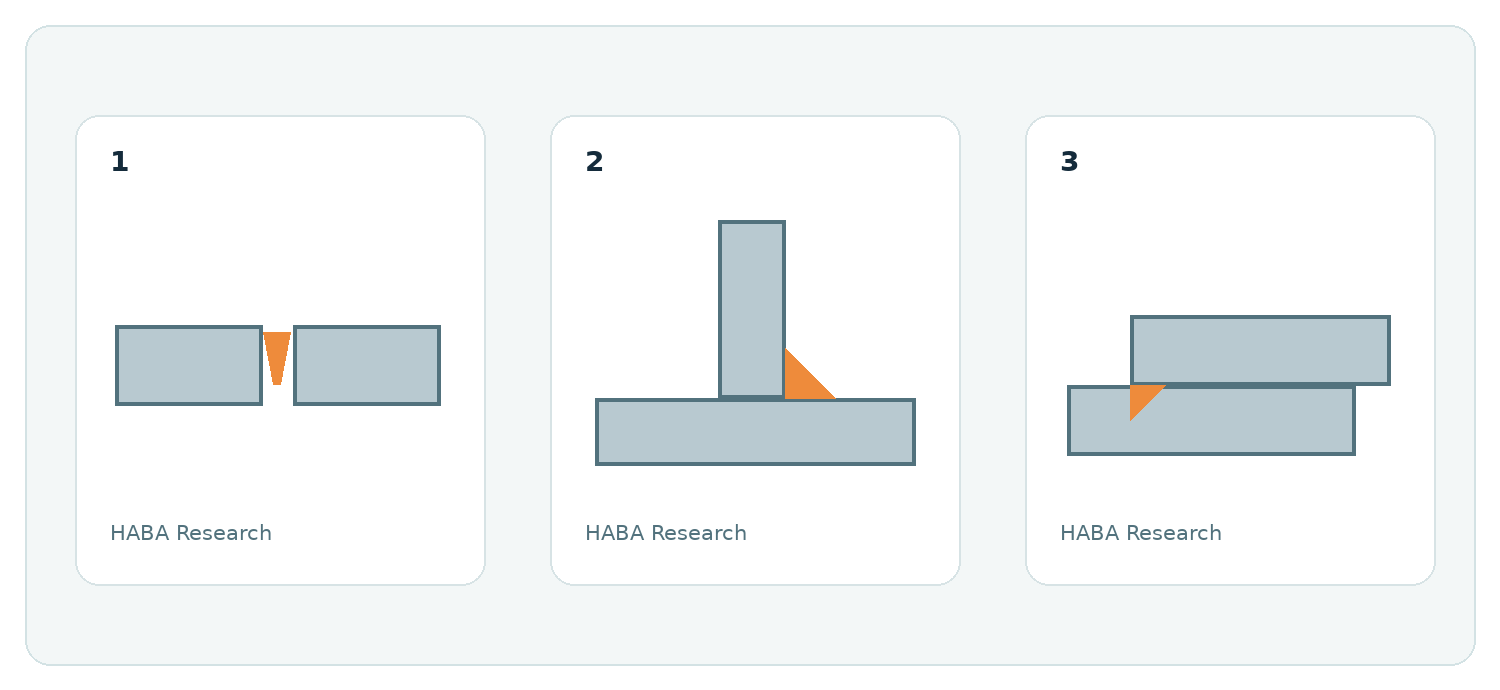
Indicate weld side, size, length, continuity, start and stop zones, inside access and finishing. Add service loads and acceptance criteria for critical joints. A note such as “weld every corner” leaves too much room for interpretation and makes supplier quotes difficult to compare.
Continuous or intermittent seam?
A continuous seam may be needed for sealing or a specified structural function. Intermittent segments can reduce total deposited weld metal and heat, but they cannot replace a continuous joint without checking the design. Show segment length and spacing on the drawing.
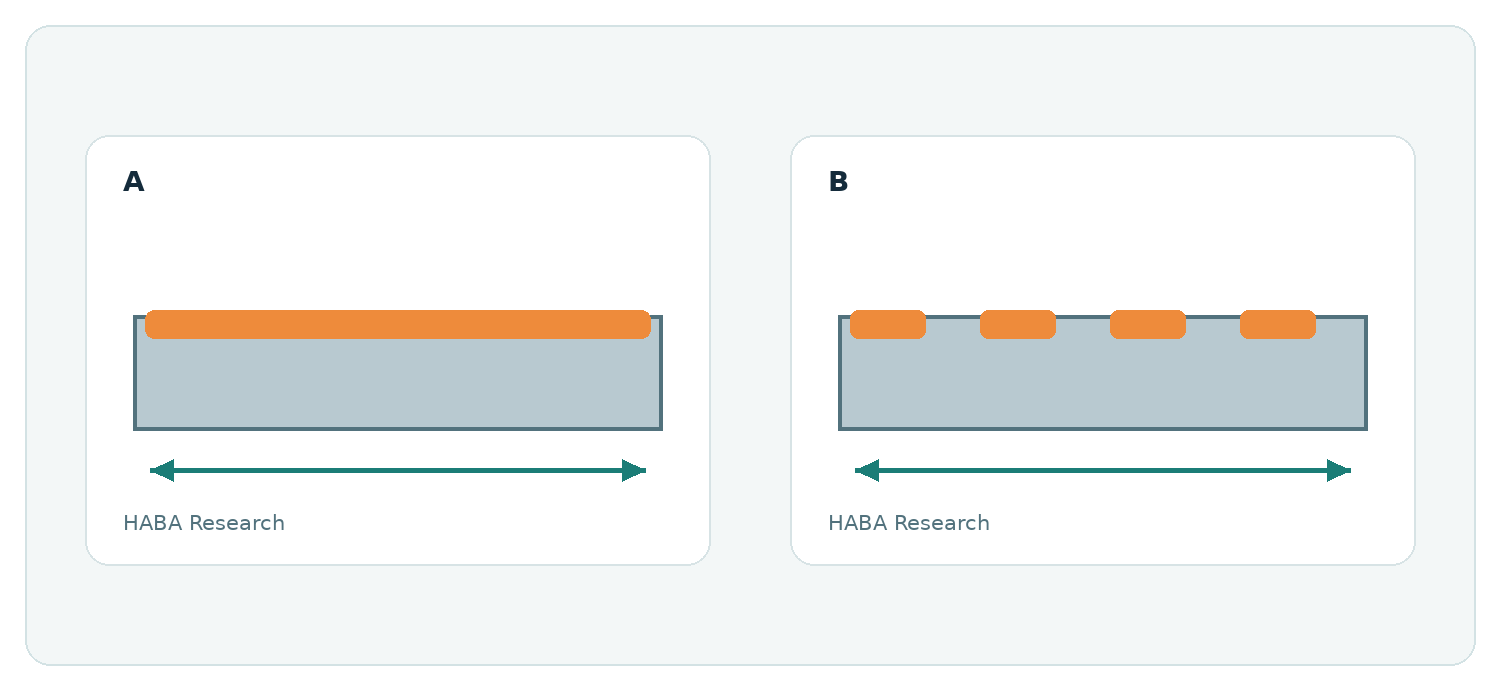
Weld distortion results from uneven heating and contraction. Good fit-up, appropriate weld size, fixturing and a planned sequence help control it. Oversized welds add cost and can increase distortion. On thin sheet or visible surfaces, specify tolerances after welding, not only the tolerances of the cut blanks.
Material-specific requirements
Steel: state grade, thickness, use environment and corrosion protection. For powder coating, identify masked surfaces and areas needing pre-coating finishing.
Stainless steel: state grade, visible faces and corrosion requirements. Heat tint around a weld can impair local corrosion resistance; specify appropriate post-weld cleaning or treatment for the application. Define cosmetic texture and scratch-free packing if needed.
Aluminium: state alloy and temper, access to the joint and appearance requirements. The procedure and feasibility need confirmation for the actual part.
RFQ checklist
- STEP model and dimensioned PDF drawing; DXF/DWG for flat profiles where available.
- Material grade, thickness, quantity and the same revision on every file.
- Type, side, size, length and continuity of every weld.
- Joint function: load bearing, sealing, cosmetic or positioning.
- Required tolerances after welding and visible surfaces.
- Finish, corrosion protection, packing, inspection records and delivery destination.
For repeat batches, include inspection and traceability requirements. HABA confirms process, feasibility, tolerances and lead time from your documents. See our TIG, MIG and laser welding service or send us your drawing.
Frequently asked questions
Is there one standard tolerance for every welded assembly?
No. Geometry, thickness, seam length, fixture design and welding sequence all matter. We confirm tolerances against the specific drawing.
When is a continuous weld required?
When the part function requires it, such as sealing or a calculated structural load. The designer must specify this; an intermittent seam needs a separate design check.
Does a stainless weld need finishing?
That depends on service conditions and visual requirements. Specify heat-tint removal, surface texture or protective packing where relevant.
Can HABA deliver a complete assembly in the EU?
Yes. An RFQ may cover cutting, bending, welding, machining, finishing and EU delivery. Route, lead time and shipping are confirmed in the quote.
Technical sources
- TWI: MIG vs TIG welding
- TWI: distortion prevention by design
- TWI: heat tint on stainless steel
- TWI: fillet weld sizing
Informational guide; it does not replace structural design, an approved welding procedure or the contractual standard for your project.